


Dr Alvin Ng
Senior Consultant Nephrologist
- Bachelor of Medicine and Surgery (Auckland, New Zealand)
- Fellow of the Royal Australasian College of Physicians
- Fellow of the Academy of Medicine, Singapore (Renal Medicine)
When the kidneys are no longer able to effectively remove waste products from the body, harmful toxins can begin to build up in the bloodstream. This may occur in individuals with advanced chronic kidney disease, kidney failure or certain renal conditions that progressively reduce kidney function over time.
Learning that your kidneys are no longer functioning properly can feel overwhelming, especially when faced with the possibility of permanent treatment. In these situations, understanding how dialysis works and the role it plays in supporting the body can help patients feel more prepared when exploring long-term kidney care options.
What Is Peritoneal Dialysis (PD)?
Dialysis is a treatment that helps remove waste products, excess fluid and toxins from the blood to help maintain the body’s chemical balance. It is carried out when the kidneys are no longer able to function, such as in the case of end-stage chronic kidney disease (CKD). For many patients with advanced kidney failure, dialysis becomes an essential long-term treatment needed to support survival and maintain daily bodily functions.
Peritoneal dialysis (PD) is one type of dialysis that uses the lining of the abdomen as a natural filter to clear waste from the body. A cleansing fluid called dialysate is introduced into the abdominal cavity through a catheter, where waste products and excess fluid pass into the fluid before being drained from the body.
Unlike haemodialysis, which filters blood through a dialysis machine in a clinic, PD is typically performed at home and may offer greater flexibility for patients.
What Are the Different Types of Peritoneal Dialysis?
There are two main types of peritoneal dialysis, both of which use the peritoneum as a natural filter to remove waste products and excess fluid from the body. The main difference lies in how the dialysis exchanges are performed, with different treatment schedules being offered according to the patient’s medical needs and lifestyle.
Continuous Ambulatory Peritoneal Dialysis (CAPD)
CAPD is performed manually without the use of a machine. During treatment, dialysis solution is introduced into the abdomen through a catheter, where it remains for several hours to allow waste products and excess fluid to be filtered before being drained and replaced with fresh solution. These exchanges are typically performed three to five times throughout the day.
Automated Peritoneal Dialysis (APD)
APD uses a machine known as a cycler to automatically perform fluid exchanges. Treatment is commonly carried out overnight while the patient sleeps, with the machine cycling dialysis solution in and out of the abdomen over approximately 8–10 hours according to a programmed schedule.
What Is the Peritoneal Dialysis Process Like?
Starting peritoneal dialysis may initially feel intimidating, especially for patients adjusting to long-term kidney care. Understanding what the treatment process involves, from preparation and training to performing dialysis at home, can help patients feel more confident and better prepared for daily life with PD.
Pre-Treatment Assessments and Catheter Placement
Before starting PD, patients will undergo medical assessments to evaluate their kidney function, overall health and suitability for treatment. A minor surgical procedure is then performed to place a catheter into the abdomen, which will be used to introduce and drain dialysis solution during treatment.
Training and Home Preparation
Patients and caregivers will receive training on how to safely perform PD at home, including hygiene practices, catheter care and how to carry out fluid exchanges. The home environment may also need to be prepared to ensure a clean and suitable space for treatment.
Performing Peritoneal Dialysis
During PD, dialysis solution is introduced into the abdominal cavity through the catheter. The solution remains in the abdomen for a period of time, allowing waste products and excess fluid to pass through the peritoneal membrane into the fluid. Once filtration is complete, the used solution is drained and replaced with fresh dialysate. The treatment schedule and frequency of exchanges depend on whether CAPD or APD is being performed.
Ongoing Monitoring and Care at a Peritoneal Dialysis Clinic
Patients undergoing PD will require regular follow-up appointments to monitor kidney function, review treatment effectiveness and check for potential complications such as infections. Adjustments to the dialysis plan may also be made over time according to the patient’s condition and treatment needs.
What Are the Benefits and Limitations of Peritoneal Dialysis?
Peritoneal dialysis offers greater flexibility and convenience for treatment, but also comes with certain risks and responsibilities that should be carefully considered with a kidney specialist.
Potential Benefits of PD
For some patients, PD may provide a more manageable dialysis routine that can be integrated into daily life more independently.
- Treatment is typically performed at home rather than in a dialysis centre
- Flexible scheduling depending on the type of PD performed
- Less physically intensive for some patients
- Reduced need for frequent travel to healthcare facilities
- Greater ability for some patients to continue work, daily activities and their current lifestyle
Possible Risks and Challenges
Despite its convenience, PD still involves ongoing medical care and responsibilities that can affect daily life.
- Risk of infections such as peritonitis and catheter-site infections
- Need for strict hygiene practices during every dialysis exchange
- Daily treatment routine that requires consistency and discipline
- Physical and emotional adjustment to long-term dialysis treatment
- Storage space needed for dialysis supplies and equipment at home
- May not be suitable for patients with certain abdominal conditions or medical complexities
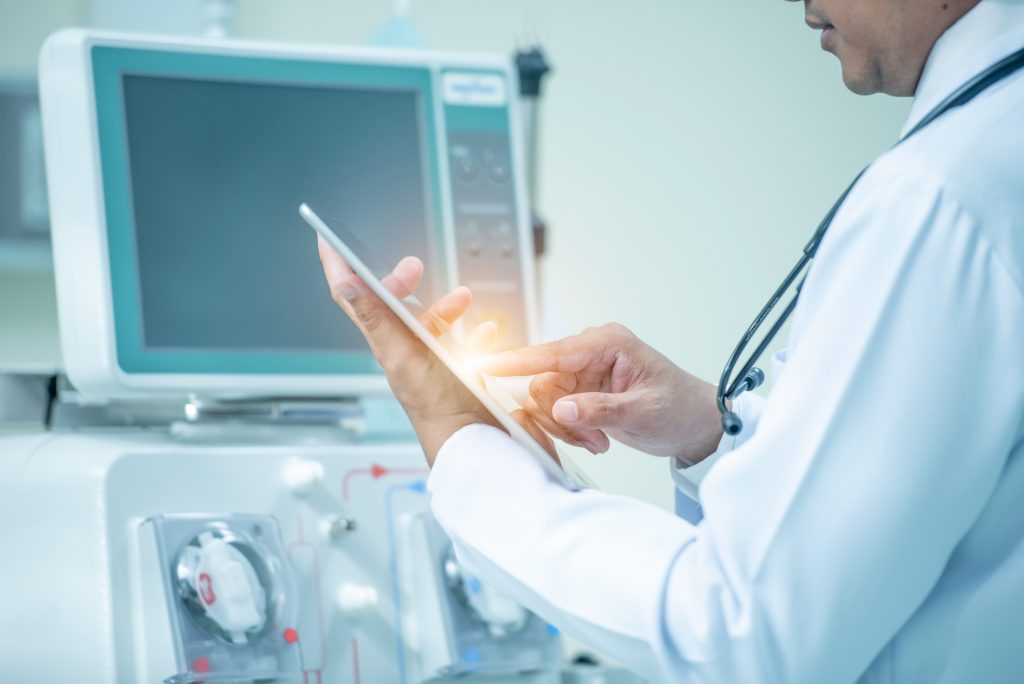
Preparing for Long-Term Kidney Care With Peritoneal Dialysis
Adjusting to life with dialysis can take time, particularly for patients adapting to long-term treatment routines and lifestyle changes. Peritoneal dialysis may offer increased independence compared to other options, but it still requires significant adjustments to your daily routine, both physically and mentally. Patients will need time to adapt to performing regular exchanges, and during this period, having access to professional medical guidance and a clear understanding of the treatment can help make this transition feel more manageable over time.
At The Kidney Health Care Clinic, patients receive comprehensive kidney care led by Dr Alvin Ng Kok Heong, our senior consultant nephrologist. The clinic provides evaluation and management for a wide range of kidney conditions, including chronic kidney disease, kidney failure and dialysis-related care. Treatment plans are tailored according to each patient’s medical condition, treatment goals and daily lifestyle considerations to support long-term kidney health management.
If you would like to learn more about peritoneal dialysis or discuss whether PD may be suitable for your condition, contact us today to arrange a consultation.
Meet Our Kidney Specialist in Singapore
Dr Alvin Ng Kok Heong
Senior Consultant Nephrologist
MBChB (Auckland), FRACP (Aus), FAMS (Renal Medicine)
Dr Alvin Ng is a nephrologist and kidney specialist in Singapore with more than 20 years of experience. He specialises in managing a wide range of kidney conditions and is dedicated to providing comprehensive, personalised and evidence-based care for patients with kidney disease.
Dr Ng obtained his Bachelor of Medicine and Surgery from the University of Auckland in 2002 and completed his nephrology training in New Zealand. He was admitted as a Fellow of the Royal Australasian College of Physicians in 2010. Prior to private practice, he served as a Consultant Nephrologist at North Shore Hospital, Auckland, from 2010 before joining the Department of Renal Medicine at Changi General Hospital (CGH) in 2012.
Throughout his career in public healthcare, Dr Alvin Ng held several leadership positions within the nephrology community and received numerous awards in recognition of his service and dedication as a kidney specialist.


